The short answer
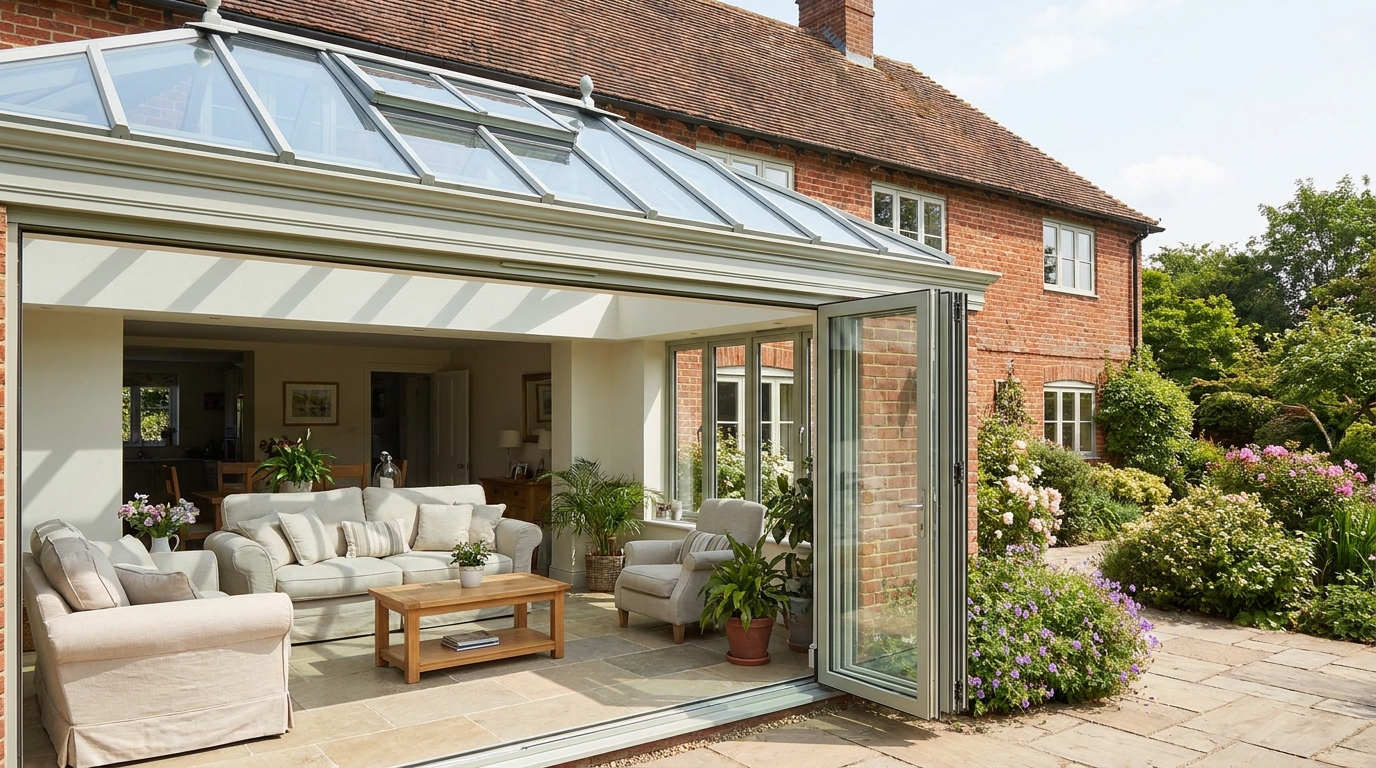
An orangery has substantially more solid wall than a conservatory and typically features a flat central roof with a glazed lantern, giving it a room-like feel rather than a greenhouse feel. Planning rules treat them differently, and the cost difference is significant. If year-round comfort is the goal, an orangery is generally better suited — but there is a wide spectrum between the two. See what is a conservatory and conservatory vs extension for context.
The boundary between an orangery and a conservatory has always been blurry, and some installers use the terms interchangeably for marketing purposes. But there is a real structural distinction that affects building regulations, planning, heating performance and how the room feels to use. An orangery originated as a purpose-built room for cultivating citrus trees — substantial brick walls with tall windows and a glass lantern roof above. The modern orangery carries those proportions forward: more solid wall, a perimeter flat roof section with a central glazed lantern, and often full brick or rendered pier columns rather than slim glazing frames. The result is a space that reads more like a proper room than a glass box.
Orangery vs conservatory at a glance
- Wall construction Orangery: mostly brick/solid. Conservatory: mostly glazed
- Roof Orangery: flat with lantern. Conservatory: mostly glazed
- Planning classification Orangery often classed as extension
- Building regs Orangery usually needs Part L compliance
- Typical cost premium Orangery typically 30–80 % more than conservatory
- Year-round comfort Orangery significantly better
The structural difference
The defining structural difference is the proportion of solid to glazed wall. A conservatory has at least 50 % glazed walls and at least 75 % glazed roof — those proportions are what give it its legal identity in planning and building regulation terms. An orangery flips those ratios: the walls are predominantly solid (brick, block or render), with glazing typically in tall window sections between brick or rendered piers. The roof is normally a flat perimeter section — sometimes tiled, sometimes clad in lead or felt — with a central glazed lantern that draws light down into the room. This combination of solid walls and a lantern roof is what makes an orangery perform so much better as a year-round habitable space: the solid walls provide thermal mass and insulation, while the lantern gives the light-filled quality of a glazed room without the temperature extremes of an all-glass roof.
Planning and building regulations
Because an orangery has mostly solid walls and a partly solid roof, it almost always falls into the same planning and regulatory category as a standard extension rather than a conservatory. That means:
- It cannot benefit from the conservatory exemption under Building Regulations Part L and must meet full energy-efficiency standards for walls, roof and glazing.
- Permitted development rules still apply for single-storey rear extensions — most orangeries fall within PD if they are within the size limits — but the design must comply with extension rather than conservatory PD criteria.
- The higher build standard required by full Part L compliance also means better long-term running costs and thermal performance.
Always check with your local planning authority, particularly if you are in a conservation area, an Article 4 direction area, or if the property is listed. See do you need planning permission for more detail on the rules.
Cost comparison
An orangery is typically more expensive than a like-for-like conservatory because of the additional brickwork, plastered walls, a more complex roof structure and the need to meet full Part L building regulations. Typical indicative ranges in the UK (2025–2026):
| Structure | Typical cost range | Main cost drivers |
|---|---|---|
| uPVC conservatory | £8,000–£18,000 | Frame colour, roof type, size |
| Aluminium conservatory | £14,000–£28,000 | Slim sightlines, thermal performance |
| Orangery (part solid) | £20,000–£50,000+ | Brickwork, lantern size, Part L compliance |
| Full brick extension | £25,000–£70,000+ | Size, spec, structural work |
These are typical illustrations, not quotes; actual prices vary considerably by region, site conditions and specification. See conservatory cost and orangery cost for more detailed breakdowns.
Year-round comfort — the real-world difference
This is where the practical difference is most felt. A conventional conservatory with a glass or polycarbonate roof can be uncomfortably hot in summer (direct solar gain through the glass) and cold in winter (rapid heat loss through the same glazing). Solar-control glass and good ventilation help, but the fundamental physics of an all-glass envelope remains. An orangery, with its insulated perimeter walls and partly solid roof, behaves far more like a room than a greenhouse: the thermal mass of the solid walls moderates temperature swings, and the insulated roof section dramatically reduces heat loss. The glazed lantern still provides a flood of light and the sense of connection to the outside, but without the extreme temperature penalty. If the intention is to use the space as a dining room, kitchen extension or home office all year round, the comfort argument for an orangery over a conservatory is strong.
Which is right for your home?
The choice comes down to budget, aesthetic and how the space will be used. A conservatory is the right answer if budget is the primary constraint, if a light-filled garden room for milder months is the goal, or if the planning situation makes a conservatory the easier permitted development route. An orangery makes sense if year-round habitability is essential, if the property’s character suits the more substantial structure, or if the investment in a higher-spec build is justified by the space’s intended use. See conservatory vs orangery vs extension for a full three-way comparison, and best conservatory for year-round use for practical advice on making the most of either. This page is general information, not planning or structural advice; always consult a qualified installer and your local planning authority before proceeding.
Frequently asked questions
Is an orangery more expensive than a conservatory?
Typically yes — often 30 to 80 % more, depending on size and specification. The higher cost reflects more brickwork, a complex roof structure and the need to meet full building regulations Part L. See our orangery cost guide.
Does an orangery need planning permission?
An orangery is usually classified as an extension, so the single-storey extension permitted development rules apply. Most rear orangeries within the size limits do not need planning permission, but properties in conservation areas or with Article 4 directions should always check first.
Is an orangery better than a conservatory?
For year-round use, an orangery generally performs better because of its insulated solid walls and partly solid roof. A conservatory is lighter, cheaper and better for seasonal garden-room use. The right answer depends on how you intend to use the space and your budget.
Can I convert a conservatory to an orangery?
A full structural conversion is possible but expensive — it effectively involves demolishing the conservatory and rebuilding in orangery style. A more common and practical route is a solid conservatory roof replacement, which improves thermal performance without rebuilding the walls.
Sources & further reading
- Planning Portal — permitted development rules for single-storey extensions and conservatories
- Glass & Glazing Federation — UK guidance on orangery construction, glazing proportions and energy performance
- GOV.UK — Building Regulations Approved Document L, conservatory exemption and extension compliance
- LABC — Local Authority Building Control guidance on orangery classifications and Part L requirements
This is general information about conservatories and orangeries in the UK, not planning, structural, legal or financial advice. Costs are typical illustrations only and are not quotes for any specific project; actual prices vary with size, site conditions and your chosen installer.