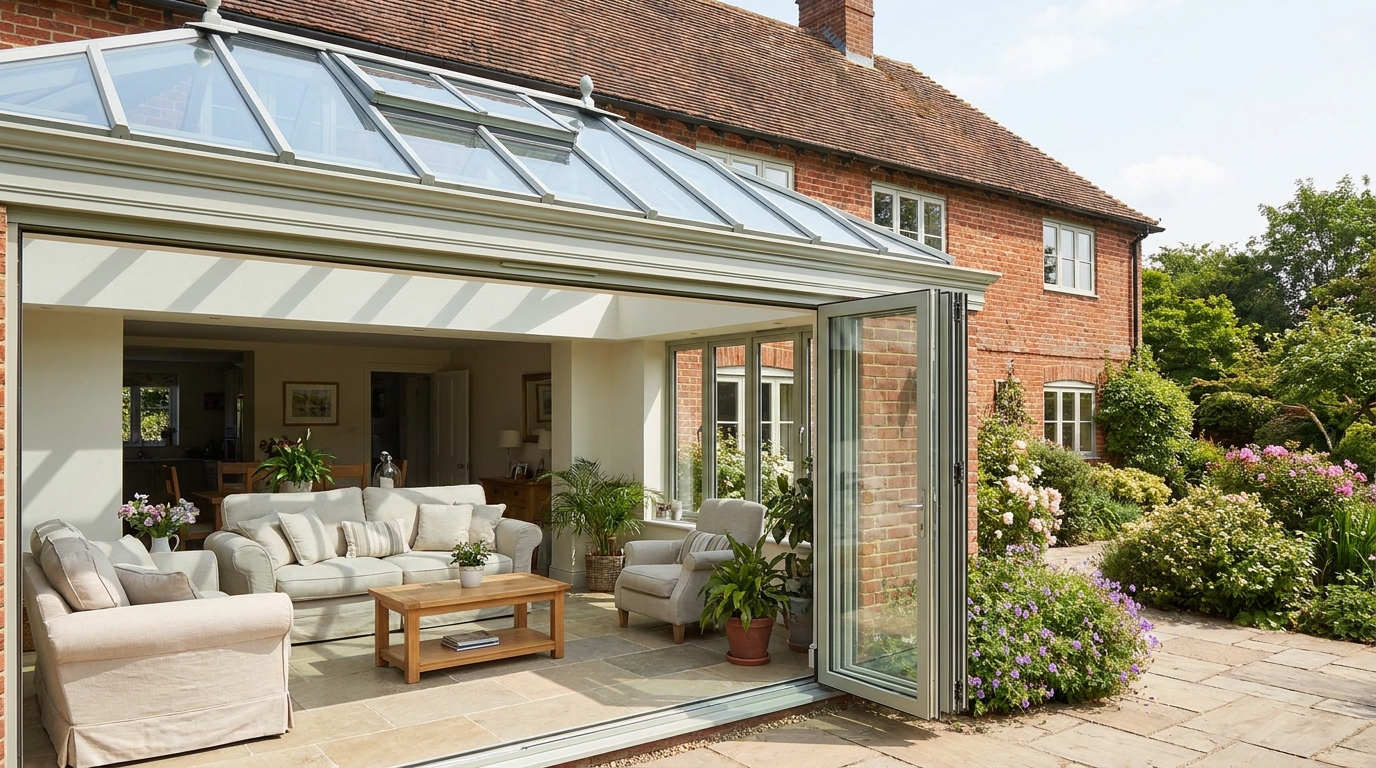
The short answer
A conservatory is a single-storey glazed extension, typically with a transparent or translucent roof, attached to the rear or side of a house. In the UK it sits in a legal grey zone: it qualifies for permitted development exemptions that a standard extension does not, but only if it meets specific rules about glazing, size and heating. See types of conservatory for the main styles and orangery vs conservatory for how they differ.
The word “conservatory” has a precise legal meaning in UK planning law as well as a loose everyday one. In everyday use it describes any glazed room added to a house. In planning and building regulation terms the rules hinge on exactly how much of the roof and walls is glazed, whether the room is permanently heated, and whether it is separated from the main house by external-quality doors and glazing. Getting those details right determines whether your project needs planning permission, whether it must comply with Part L energy regulations, and ultimately how comfortable and useful the space is year-round.
Conservatory at a glance
- Typical roof glazing 75 %+ translucent or transparent
- Typical wall glazing 50 %+ glass or polycarbonate
- Planning status Often permitted development — but rules apply
- Building regs Exempt if unheated & thermally separated
- Typical size 10–20 m² most common
- Lifespan 20–40 years depending on frame and roof
The legal definition — why glazing proportions matter
Under the Town and Country Planning (General Permitted Development) Order, a conservatory can avoid the need for planning permission as a permitted development addition. However, the word “conservatory” is not just a style label: HMRC and planning guidance both define it as a structure where at least 75 % of the roof area and at least 50 % of the wall area is glazed with translucent or transparent material. If those proportions are not met, the structure is treated as an extension and the permitted development conditions change. This distinction matters if you later need to demonstrate compliance to a buyer’s solicitor or mortgage lender.
Building regulations — when the exemption applies
A conservatory is also the only addition to a house that can be exempt from Building Regulations Part L (energy efficiency), provided it meets three conditions set out in Approved Document L. First, it must be built at ground level. Second, the floor area must be less than 30 m². Third — and this is the condition most often overlooked — it must be separated from the main house by walls, doors or windows of no worse thermal performance than those that existed before the conservatory was added. That separation is what allows the space to be treated as an unheated buffer zone rather than a habitable room. If the conservatory is permanently heated or the separation is removed, the exemption falls away and the whole structure must comply with current Part L standards, including insulated foundations and a thermally efficient roof.
How a conservatory differs from an extension
People sometimes use “conservatory” and “extension” interchangeably, but they are structurally and legally different. An extension has a solid roof, insulated walls to Part L standards, and is fully integrated with the house’s heating system. A conservatory has a mostly glazed envelope and — in its traditional form — a separate heating circuit or none at all. The practical consequence is that an extension costs more, takes longer and faces more regulatory hurdles, but delivers a space that is genuinely usable in all weather. A conservatory is quicker and cheaper, but the glass roof creates real overheating and heat-loss challenges unless the design and ventilation are carefully considered. See conservatory vs extension for a detailed comparison, and are conservatories too hot in summer for how to manage the temperature.
| Feature | Conservatory | Extension |
|---|---|---|
| Roof | Mostly glazed | Solid, insulated |
| Wall glazing | 50 %+ glass | Typically brick or timber frame |
| Building regs Part L | Can be exempt | Must comply |
| Planning permission | Often PD (rules apply) | Often PD but stricter limits |
| Year-round comfort | Harder without roof upgrade | Same as main house |
| Typical cost | £8,000–£25,000+ | £20,000–£60,000+ |
The main frame materials
UK conservatories are built in three main frame materials, each with different costs, lifespans and maintenance requirements. uPVC is by far the most common, accounting for the majority of installations, because it is relatively affordable, low-maintenance and now available in a wide range of colours. Aluminium is slimmer in profile and perceived as more contemporary; it costs more but aluminium frames carry excellent thermal performance ratings from FENSA and are increasingly chosen for modern homes. Timber is the traditional choice for period properties and those in conservation areas, but it requires periodic repainting and is the most expensive to install and maintain. Frame material also affects the visual weight of the structure: aluminium’s narrower sightlines admit more light for the same opening size.
Roof types and their impact
The roof is arguably the most important decision in conservatory design because it governs temperature, noise and how the space feels. Polycarbonate is the lowest-cost option but is now widely regarded as outdated — it is translucent rather than clear, conducts heat poorly in winter and turns the space into a greenhouse in summer. Glass roofs are the modern standard: modern units with solar-control or self-cleaning coatings address some of the overheating problem, though not completely. Solid tiled roofs — sometimes called “warm roofs” — are increasingly popular because they eliminate the temperature extremes and dramatically reduce noise, though they cross the legal line from conservatory to extension in planning terms. See conservatory roof options for a full comparison of the types.
This page provides general information about conservatory definitions and types in the UK. Planning and building regulation rules vary by property type and location, so it is always worth checking with your local planning authority or a FENSA-registered installer before committing to a design.
Frequently asked questions
Does a conservatory need planning permission?
Often not, if it falls within permitted development rules: single storey, under 50 % of the original curtilage, and meeting glazing and size thresholds. Leasehold, listed buildings and properties in conservation areas have stricter rules. Check the Planning Portal or your local planning authority.
Is a conservatory the same as an orangery?
No. An orangery has a much higher proportion of solid wall and a central lantern or flat roof section, whereas a conservatory has mostly glazed walls and roof. See our orangery vs conservatory guide for the full comparison.
Does a conservatory need building regulations approval?
A conservatory under 30 m² at ground level, separated from the main house by walls, doors or windows, is generally exempt from Part L building regulations. If it is permanently heated or larger, full compliance is typically required.
How long does a conservatory last?
A well-built uPVC conservatory typically lasts 20–30 years; aluminium frames can last longer. The roof glazing often needs replacing first. Regular maintenance, particularly of seals and guttering, extends the lifespan.
Sources & further reading
- Planning Portal — permitted development rights for householders, conservatory rules and glazing thresholds
- FENSA — Fenestration Self-Assessment Scheme guidance on glazing standards and installer registration
- GOV.UK — Building Regulations Approved Document L (conservation of fuel and power) conservatory exemption
- Glass & Glazing Federation — UK guidance on conservatory frame materials, roof glazing and energy performance
This is general information about conservatories and orangeries in the UK, not planning, structural, legal or financial advice. Costs are typical illustrations only and are not quotes for any specific project; actual prices vary with size, site conditions and your chosen installer.