The short answer
A typical orangery in the UK costs £20,000–£50,000 or more depending on size, brickwork specification and lantern design. The higher cost versus a conservatory reflects more brickwork, a more complex roof structure and the requirement to meet full Building Regulations Part L. See orangery vs conservatory for the full comparison and does a conservatory add value for the return-on-investment question.
Orangery prices are harder to pin down than conservatory prices because the structure is more bespoke — the proportion of brick to glazing, the lantern design and the degree of interior finishing vary enormously from one project to the next. Unlike a uPVC conservatory where most of the cost is in prefabricated components, an orangery involves substantial site-built masonry, a complex roof junction, and typically a higher quality of interior fitting. The figures below are typical illustrations based on UK trade guidance.
Orangery cost at a glance
- Small orangery (under 20 m²) £20,000–£30,000 installed (typical)
- Medium orangery (20–35 m²) £30,000–£50,000 installed (typical)
- Large / bespoke £50,000–£100,000+
- vs conservatory premium Typically 40–100 % more for equivalent footprint
- Planning Usually treated as extension — PD rules apply
- Building regs Full Part L compliance required
Why orangeries cost more than conservatories
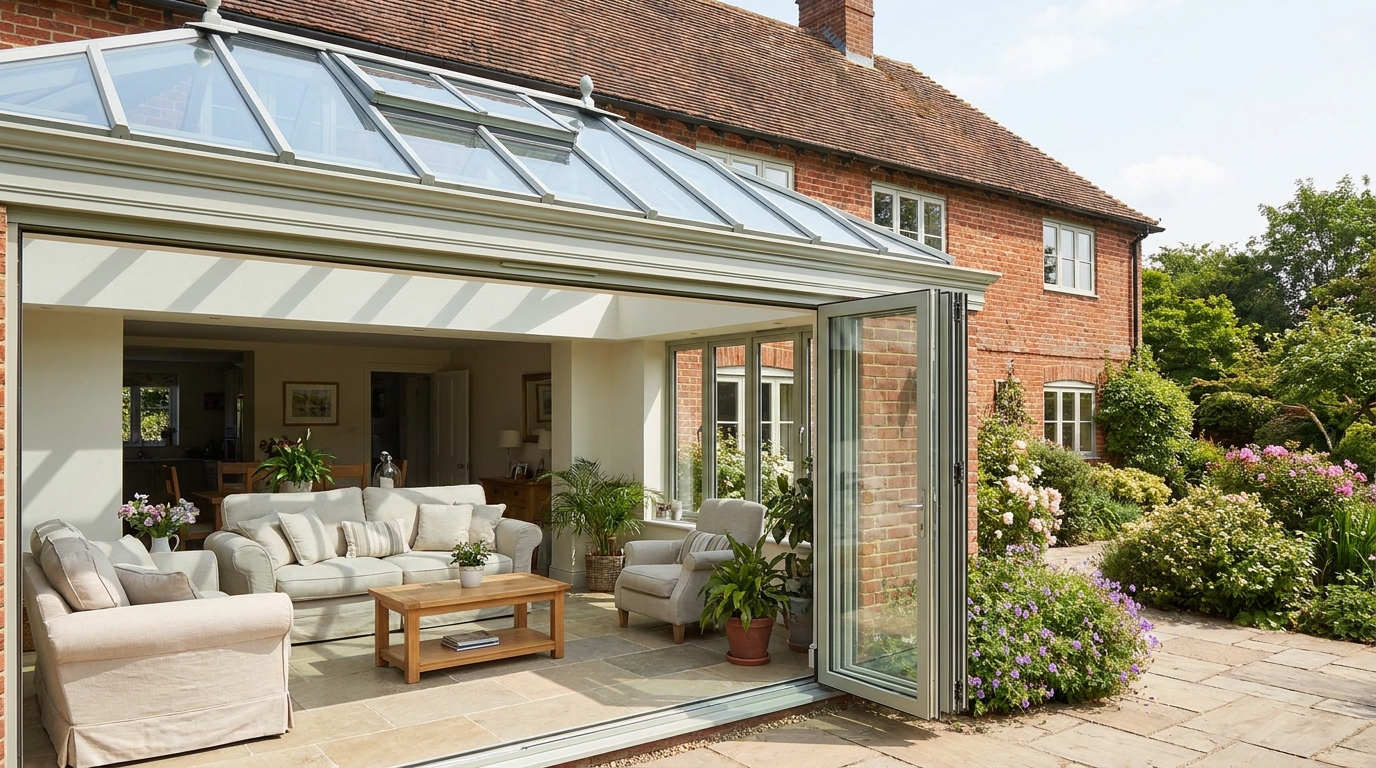
The price premium over a conservatory of equivalent footprint exists for several interrelated reasons. First, an orangery involves substantially more brickwork — the piers, solid wall sections, and the perimeter flat-roof structure all require traditional masonry skills and materials. Second, the lantern roof is a bespoke, precision-engineered structure that must marry the flat perimeter with the central glazed element, creating more complex junctions and weatherproofing challenges. Third, because an orangery is classified as an extension rather than a conservatory, it must meet full Building Regulations Part L (energy efficiency) standards for walls, roof and glazing, which typically means better-insulated construction throughout. Finally, orangeries tend to be finished to a higher interior standard — plastered walls, quality underfloor heating, fitted lighting — all of which add to the total.
Typical cost ranges
| Size | Basic specification | Mid specification | High specification |
|---|---|---|---|
| Under 20 m² | £18,000–£25,000 | £25,000–£35,000 | £35,000–£50,000+ |
| 20–35 m² | £28,000–£40,000 | £40,000–£60,000 | £60,000–£90,000+ |
| Over 35 m² | £45,000+ | £65,000+ | £90,000+ |
These ranges are typical illustrations based on UK trade data and are not quotes for any specific project. Costs vary by region, site conditions and the proportion of brickwork to glazing. London and the South East typically run 20–35 % above national average for equivalent work.
What the lantern adds
The central glazed lantern is both the architectural signature of an orangery and one of its key cost items. A standard rectangular lantern on a medium orangery adds approximately £5,000–£12,000 to the cost over a conservatory roof. A bespoke larger lantern, a curved lantern, or one incorporating rooflights alongside a solid perimeter roof can cost substantially more. The lantern also affects planning and building control considerations: the overall roof height and the proportion of glazed to solid roof affect whether the structure crosses any thresholds. Confirm the lantern specification and its U-value with your installer at quote stage.
What to include in a quote comparison
When comparing orangery quotes, make sure each one specifies: the brickwork specification (type and quality of brick or render); the lantern size and glazing U-value; the perimeter roof insulation value; the door type and count; underfloor heating provision; electrical first fix; and all groundworks. Many orangery quotations start with a price that excludes some or all of the interior finishing — plastering, floor screed, decorating. Ensure you are comparing like with like across at least three quotes from companies experienced in orangery construction, and check references for completed orangery projects specifically, not just conservatory work. See how to choose a conservatory company for the full vetting checklist.
Does the cost of an orangery reflect the value?
Because an orangery delivers a fully habitable room that meets building regulations, it adds to the habitable floorspace of the property in a way that a conservatory does not. Estate agents and surveyors typically value additional habitable space more highly than a conservatory. Whether the investment makes financial sense depends on how long you intend to stay in the property, what premium comparable homes with larger footprints command in your area, and how much use you will get from the space. See does a conservatory add value for the broader value question. This page provides typical cost illustrations only — always obtain written fixed quotes from qualified, registered builders or installers.
Frequently asked questions
Is an orangery more expensive than a conservatory?
Yes, typically 40–100 % more for an equivalent footprint, because of the additional brickwork, complex roof structure and requirement for full building regulations Part L compliance.
Does an orangery add value to a house?
A well-built, building-regulations-compliant orangery adds habitable floorspace and is generally valued more positively by surveyors and estate agents than a conservatory. The actual uplift depends on the local market. See our value guide.
Do you need planning permission for an orangery?
An orangery is classified as an extension, so single-storey extension permitted development rules apply. Most rear orangeries within standard size limits do not need planning permission, but conservation area properties and listed buildings should always check with the planning authority.
How long does an orangery take to build?
A typical orangery takes 8–14 weeks from groundworks to completion, longer than a conservatory because of the masonry work. Complex or large orangeries may take longer.
Sources & further reading
- Glass & Glazing Federation — orangery construction standards, glazing specifications and lantern design
- LABC — Local Authority Building Control guidance on orangery classification and Part L compliance
- Planning Portal — permitted development rules for single-storey extensions and orangery structures
- GOV.UK — Building Regulations Approved Document L, extension energy-efficiency requirements
This is general information about conservatories and orangeries in the UK, not planning, structural, legal or financial advice. Costs are typical illustrations only and are not quotes for any specific project; actual prices vary with size, site conditions and your chosen installer.