The short answer
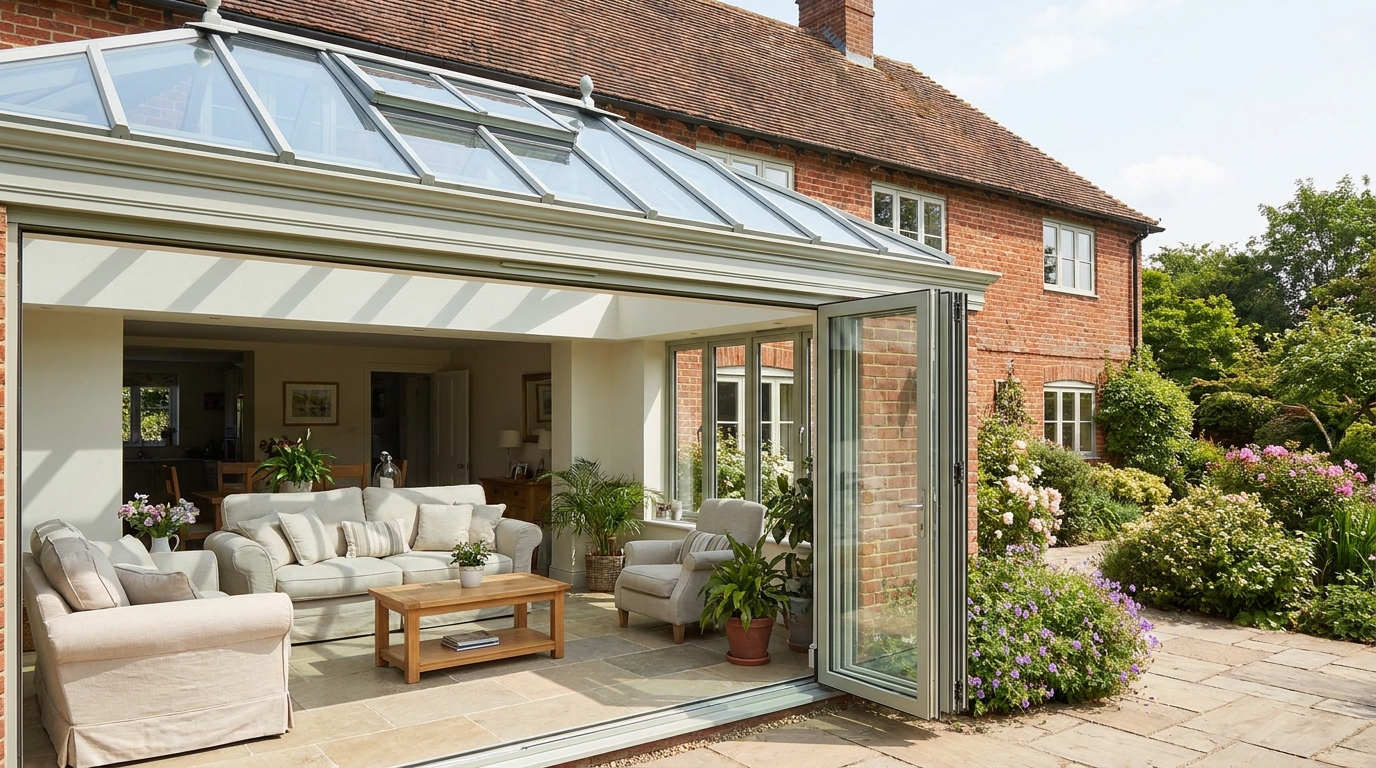
The three main conservatory roof options are polycarbonate (lowest-cost but most thermally poor), glass (the current standard — solar-control coatings make a big difference), and solid/tiled (the most thermally comfortable, but changes the structure’s legal classification). Hybrid roofs — a solid perimeter with a central glazed lantern — are typical of an orangery. See conservatory roof replacement cost and orangery vs conservatory for related guidance.
The conservatory roof is the single design decision that most influences how the space performs throughout the year. It determines summer temperature, winter heat loss, noise in rain, and whether the structure qualifies as a conservatory or an extension for building regulation purposes. Despite this, roof choice is often presented as a cost question rather than a comfort and performance question — which is how many homeowners end up with polycarbonate when glass or solid would have served them far better. This guide sets out the real differences so the choice can be made with eyes open.
Roof options at a glance
- Polycarbonate Lowest-cost; poor thermal & noise performance
- Glass (standard) Better than polycarb; solar-control coating helps
- Glass (solar-control) Current standard; lower SHGC = less heat gain
- Solid tiled Most comfortable; changes legal classification
- Hybrid lantern Solid perimeter + glazed lantern = orangery style
- Cost range Polycarbonate lowest-cost; solid tiled most expensive
Polycarbonate roofs
Polycarbonate was the dominant conservatory roof material in the 1990s and 2000s because it was light, easy to install and cheap. It remains available today but is now generally considered a poor choice for any conservatory intended for regular use. The reasons are threefold: its thermal performance is significantly worse than modern glass options, with U-values of 1.8–2.0 W/m²K meaning it provides little insulation in winter and admits substantial heat in summer; it is significantly noisier than glass in rain, which can make conversation impossible during a shower; and it discolours over time from UV exposure, turning opaque or yellow and reducing natural light. If you are specifying a new conservatory and comfort matters, polycarbonate is difficult to recommend over modern glass except on the tightest budgets. It remains a reasonable choice for an unheated garden store or utility space.
Glass roofs
Glass is now the standard for conservatory roofs, but the performance varies considerably with the coating specification. Uncoated standard double-glazed units are better than polycarbonate in most respects but still have meaningful solar gain and heat loss. The real improvement comes with solar-control low-emissivity coatings:
- Solar-control coating (outer pane): reflects a portion of incoming solar radiation, reducing the Solar Heat Gain Coefficient. A good solar-control glass can reduce solar heat gain by 30–60 % compared with standard glass. Look for SHGC values below 0.3.
- Low-emissivity coating (inner pane): reduces long-wave heat loss from the room by reflecting heat back in. This is the “warm edge” technology that improves winter performance.
- Self-cleaning coating: a photocatalytic coating on the outer surface breaks down organic dirt and the hydrophilic surface allows rain to sheet the dirt away. Reduces maintenance, particularly on steep roof slopes where hand-cleaning is difficult.
- Argon fill: argon gas between the panes improves the overall U-value of the unit. Standard on most modern conservatory glass.
| Glass specification | SHGC (typical) | U-value (typical) | Notes |
|---|---|---|---|
| Standard clear double-glazed | 0.60–0.70 | 1.4–1.6 | Significant solar gain |
| Solar-control double-glazed | 0.25–0.40 | 1.0–1.3 | Good all-round |
| High-performance low-E | 0.20–0.30 | 0.7–1.0 | Best available glass |
Solid tiled roofs
A solid tiled roof — sometimes marketed as a “warm room” or “solid roof conversion” — replaces the glazed roof with an insulated structure typically using a lightweight tile or slate on a timber or aluminium frame with insulated panels. The thermal performance is transformative: a properly specified solid roof achieves U-values of 0.15–0.20 W/m²K, eliminating the extreme temperature swings of glass. Rain noise is also dramatically reduced. The trade-off is light: a fully solid roof means the conservatory receives no overhead natural light (some designs include one or two rooflights), which changes how the room feels. Critically, a solid roof changes the structure’s legal classification from conservatory to extension, which typically requires Building Regulations compliance. See building regulations.
Hybrid roofs and orangery lanterns
The hybrid approach — a solid insulated perimeter section with a central glazed lantern — is the roof design that defines the modern orangery. It offers the thermal benefits of a solid perimeter (where most heat loss and solar gain would otherwise occur) combined with the light-quality of a central glazed lantern. The lantern brings natural light into the centre of the room in a dramatic way while the insulated perimeter ensures the space is comfortable year-round. This is the roof choice that best resolves the competing demands of light, thermal comfort and year-round usability — at a proportionally higher cost. See orangery vs conservatory and orangery cost. This page is general information; always consult a qualified installer for specific roof specifications and building regulations guidance for your project.
Frequently asked questions
Is glass or polycarbonate better for a conservatory roof?
Glass is significantly better in almost all respects: lower U-value, quieter, does not discolour, and with solar-control coatings dramatically reduces summer overheating. Polycarbonate is only justified by the tightest budgets or for unheated storage spaces.
What is a solid conservatory roof?
A solid (or ‘warm room’) roof replaces the glazed conservatory roof with an insulated structure using a lightweight tile or slate. It provides the best thermal performance but changes the structure’s legal classification, which typically requires building regulations compliance.
What is solar-control glass and do I need it?
Solar-control glass has a metallic coating that reflects incoming solar radiation, reducing the amount of heat entering the conservatory in summer. For a south- or west-facing conservatory, it can make the difference between an unusable space and a comfortable one. Look for SHGC values below 0.3.
Can I replace a polycarbonate conservatory roof with glass?
Yes. A polycarbonate roof can be replaced with glass on most standard conservatory frames, though the frame condition should be assessed first. See our roof replacement cost guide for typical costs.
Sources & further reading
- Glass & Glazing Federation — conservatory roof materials, glazing specifications, SHGC and U-value guidance
- FENSA — glazing energy performance ratings and installer registration for conservatory roofs
- GOV.UK — Building Regulations Approved Document L, solid roof classification and compliance requirements
- LABC — Local Authority Building Control guidance on solid roof conversions and building regulations applications
This is general information about conservatories and orangeries in the UK, not planning, structural, legal or financial advice. Costs are typical illustrations only and are not quotes for any specific project; actual prices vary with size, site conditions and your chosen installer.