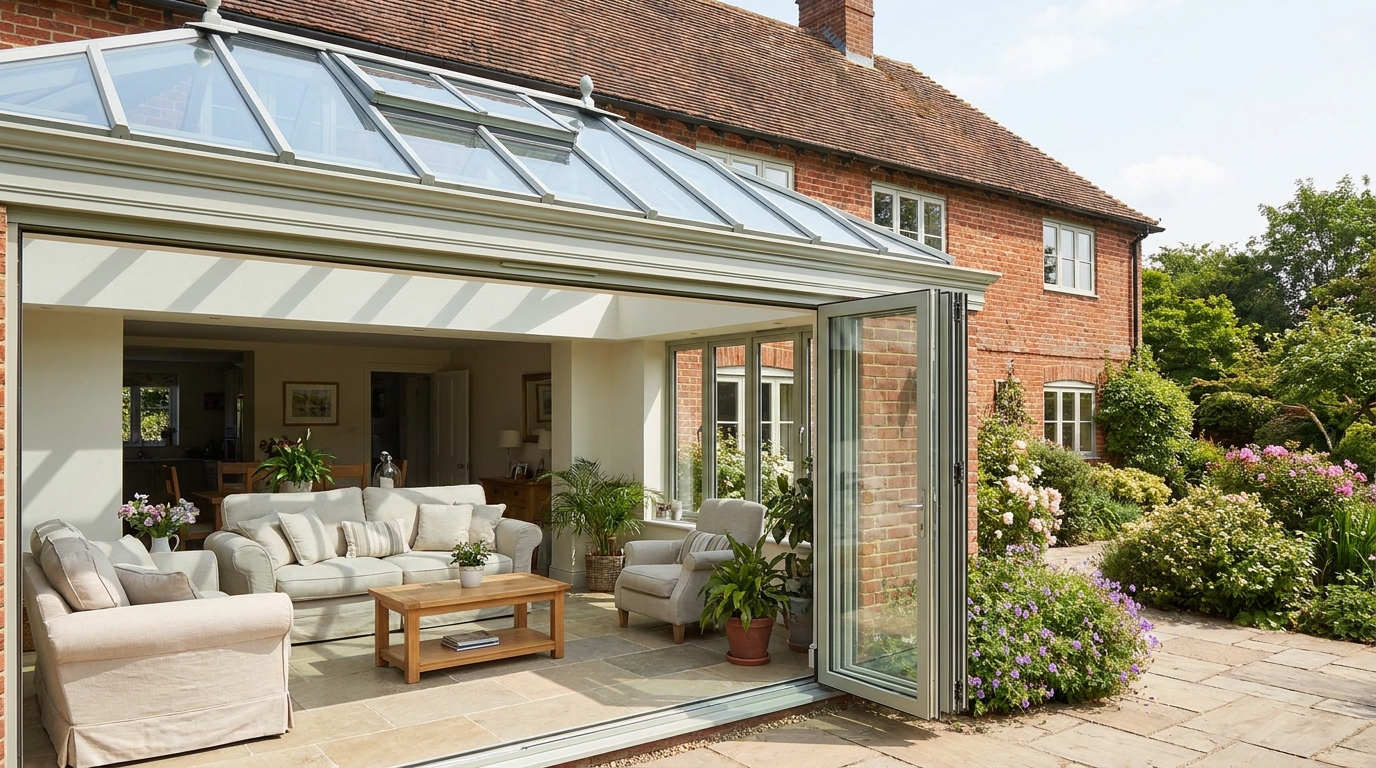
The short answer
uPVC is the cheaper option, widely available, low-maintenance and now available in a wide range of colours and woodgrain foils; aluminium costs 30–60 % more but offers slimmer sightlines, a more contemporary look and can be perceived as adding more to premium properties. Thermally, modern aluminium with thermal-break technology matches uPVC. See conservatory cost for how the frame choice affects price and types of conservatory for style options in both materials.
Frame material is the second most significant specification decision after the roof, affecting both the cost and the visual character of the conservatory. uPVC has dominated the UK market since the 1980s, partly because of cost and partly because the manufacturing base is well established. Aluminium has grown in popularity particularly for contemporary homes and higher-specification projects, driven by its slimmer sightlines and the perception that it is a premium material. Understanding the genuine differences — rather than the marketing claims — is the best starting point for a choice that suits your home.
uPVC vs aluminium at a glance
- uPVC cost Lower — typically 30–60 % less than aluminium
- Aluminium cost Higher — but slimmer, lighter, longer-lasting frame
- Thermal performance Both perform well with modern technology
- Sightlines Aluminium noticeably slimmer
- Colour options Both: wide range including foils/powder coat
- Maintenance Both: low maintenance vs timber
Cost comparison
uPVC is substantially cheaper than aluminium for equivalent conservatory sizes and configurations. A uPVC conservatory of 15–20 m² with a glass roof typically costs £10,000–£18,000 installed; the same conservatory in aluminium would typically be £16,000–£28,000. The cost premium for aluminium reflects both the material cost (aluminium extrusions are more expensive to produce than uPVC profiles) and the manufacturing complexity of thermal-break technology. The premium may be justified if the aluminium frame adds meaningfully to the property’s premium or the slimmer sightlines are important to the design. For a standard family home, however, a well-specified uPVC conservatory is an entirely sound choice and the price difference can be significant. See conservatory cost for full cost breakdowns.
Thermal performance
The historical disadvantage of aluminium — its high thermal conductivity, which caused cold-bridging, condensation and heat loss — has been substantially addressed by modern thermal break technology. A thermal break is an insulating material (typically polyamide) inserted into the aluminium profile to interrupt the conductive path between the inner and outer faces. Good-quality aluminium conservatory frames with adequate thermal break technology now achieve Centre-of-Pane U-values comparable to uPVC. For energy performance purposes, ask installers for the window energy rating (WER) or the declared frame U-value when comparing quotes — rather than assuming either material automatically performs better.
| Property | uPVC | Aluminium |
|---|---|---|
| Material cost | Lower | Higher |
| Installed price | Lower | Higher (30–60 %) |
| Thermal performance | Good (multi-chamber) | Good (thermal break) |
| Sightlines | Wider | Narrower — more light |
| Colour range | Wide (foil wrap) | Very wide (powder coat) |
| Lifespan | 20–35 years | 30–45 years+ |
| Maintenance | Low | Low |
Sightlines and aesthetics
The most visible difference between uPVC and aluminium is the frame sightline — the visible width of the frame between panes of glass. Aluminium profiles are inherently stiffer and can be made slimmer for the same structural performance, so aluminium frames typically have narrower sightlines that admit more light and look more architectural. This is a particularly relevant factor for modern or minimalist homes where slimline glazing is part of the design aesthetic. uPVC profiles are necessarily wider to achieve equivalent stiffness, but modern uPVC has improved significantly over the bulky frames of 20 years ago. On a Victorian or Edwardian conservatory on a period home, the sightline difference matters less — the chunky character of a period-style uPVC frame can look entirely appropriate.
Maintenance and lifespan
Both materials are low-maintenance compared with timber, which requires periodic repainting or restaining. uPVC requires only periodic washing with a mild cleaning solution; aluminium powder coating is similarly easy to clean. Neither material rots or corrodes in the UK climate under normal conditions. Aluminium generally has a longer expected service life — 30–45 years or more — compared with uPVC at 20–35 years, which partly reflects the greater mechanical resilience of the material. For a new-build conservatory that you intend to keep for many years, the longer aluminium lifespan is a genuine factor. For a property you expect to sell in a few years, the uPVC cost saving may be the more practical choice. This page is general information; frame specifications and performance vary by manufacturer and system, so always ask for the declared performance data when comparing quotes.
Frequently asked questions
Is aluminium or uPVC better for a conservatory?
Both are sound choices. uPVC is cheaper and widely available; aluminium has slimmer sightlines, a longer lifespan and suits contemporary homes better. Thermally, modern versions of both perform well with the right specification.
How much more does an aluminium conservatory cost?
Typically 30–60 % more than an equivalent uPVC conservatory. The premium reflects material cost, thermal-break complexity and often a higher overall specification. See our conservatory cost guide.
Does aluminium conduct the cold?
Old aluminium frames without thermal breaks were notorious for cold-bridging and condensation. Modern aluminium conservatory frames use thermal-break technology that interrupts the conductivity and achieves energy performance comparable with uPVC. Always ask for the declared U-value.
Which is more durable — uPVC or aluminium?
Aluminium generally has a longer expected service life (30–45 years vs 20–35 for uPVC) and the powder-coat finish is more durable than uPVC foil. Both are significantly more durable than timber for a conservatory application.
Sources & further reading
- FENSA — frame energy ratings, thermal performance standards and installer registration for uPVC and aluminium
- Glass & Glazing Federation — uPVC and aluminium frame specifications, sightlines and energy performance
- GOV.UK — Building Regulations Approved Document L, frame U-value and window energy rating requirements
- LABC — Local Authority Building Control guidance on glazed frame performance and compliance
This is general information about conservatories and orangeries in the UK, not planning, structural, legal or financial advice. Costs are typical illustrations only and are not quotes for any specific project; actual prices vary with size, site conditions and your chosen installer.